Categories
Uncategorized

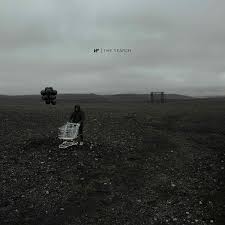
Review: The Search by NF

The Search is the fourth studio album from Michigan rapper and singer Nathan Feuerstein, aka NF. Feuerstein, now 29, has quite a bit under his belt with quite a few hit singles, as well as a platinum album (Perception). The technically skilled rapper’s early work was certainly interesting to me, and his 2017 single “Let You Down” was inescapable, but The Search was my first real critical look at Feuerstein’s work. Released last year, the album famously beat out Chance the Rapper’s disastrous The Big Day, much to the surprise of mainstream hip-hop fans. With no real foot in any camp, I feel comfortable to say The Search is retroactive in more than one way.

The Bad: Thematically, The Search is about Nathan’s past, present, and future. The first four tracks dwell on NF’s mental state—his OCD, his paranoia, his inabilities, and his demons. This may sound well and good, but after the fifteenth minute of melodramatic fast-rapping set to overblown instrumentals, it gets redundant. Much of the lyrics read one of two ways: hollow, repetitive expressions of self-hate (“That’s when I start to get anxious, That’s when my thoughts can be dangerous, That’s when I put on my makeup and drown in self-hatred”) or purposeless rhyme fillers (“I can be critical, never typical, Intricate with every syllable, I’m a criminal, Intimate, but never political, pretty visual”). This flip-flopping takes any bite out of good bars. It gives the idea that NF worries more about quantity rather than quality in wordplay. Songs like “Time” and “Hate Myself” try to emulate the pop rap success of “Let You Down” and “Lie”, but sound painfully underwritten. For some reason, Nathan seems to dislike featuring other artists on his tracks, and the hooks, sung by NF almost every time, suffer for it. As far as I can tell, there is one feature on the whole album (Sasha Sloan on “Only”). One of my biggest gripes with this album is the quality of the instrumentals. There is absolutely no variety or flavor in The Search’s beats—a death sentence for the bloated, 20 song track list. The runtime is around an hour and fifteen minutes, and the slow piano mixed with echoing drums tired me out within the first half hour. There’s only so much a man can take.

The Good: Nathan Feuerstein’s biggest strength is his fantastic (if ill-employed) flow. He does well on songs like “No Excuses”, and I enjoy a few bits of “When I Grow Up”. His voice stays crisp and smooth throughout most songs, and his raw talent is undeniable. There are moments on songs where Nathan’s honesty pushes through, and genuinely emotionally moving lines happen. One example of this is the dismal “Nate”. In this song, NF reflects on his past and his come-up. Though this is a concept not unheard of in rap, I found the dialogue between a young Nathan and his successful, future self to be rather good. Not as many lines fall flat, and the storytelling element that moves the track along is really good.

Conclusion: Though technically impressive, The Search is mired with inconsistency and uninspired melodrama. NF comes off sounding like a young Tyler Joseph, or a more innocent, straight-edge emo rapper on many songs. The hour-plus length coupled with a void of compelling backing beats stretched my patience. And, as much as I was impressed by his talented flow, NF is a bit behind the game. He has gone on the record claiming 2000’s Marshall Mathers as a big influence, and it shows a bit too much (and I can genuinely say that me calling Nathan’s work derivative of Eminem’s early career has nothing to do with anything but his sound). All in all, I did not find this album to be anything other than a blip on hip-hop’s radar, especially when you consider all the great rap albums that came out last year (All My Heroes Are Cornballs, Feet of Clay, Ginger, Bandana, and countless others.) I just hope that next time, NF summons a bit more artistic courage.

I give this album 3 balloons out of 10. Thanks for reading.

Categories
Uncategorized

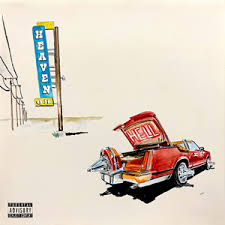
Review: Heaven or Hell by Don Toliver

‘Heaven or Hell’ is the debut studio album from Cactus Jack affiliate Don Toliver, an artist who first came onto my radar after a great feature in 2018, on Travis Scott’s ‘Astroworld’. After a pretty underwhelming performance on 2019’s Jackboys project and a lifeless Tik-Tok hit that seemed robotically engineered for the site, my interest was admittedly dialed back a bit. I hoped the lack of energy Toliver brought to ‘Jackboys’ was a fluke, not really indicative of his future as an artist, but sadly, I was let down dramatically by ‘Heaven or Hell’.

The Bad: Don Toliver struggles to do anything on his debut that does not resemble a far better artist. He often sounds like a bad version of his label head, Travis Scott. Other times, he seems to not just emulate, but plagiarize Young Thug’s sing-song style flows, just with less personality and flair than Thugger. Furthermore, throughout the 12 song track list, there are nearly no songs that actively jump out to me. Toliver’s dreary style is the epitome of boring; he makes songs that are 2:30 feel like 5 minute treks. I couldn’t count how many times I had to rip my finger away from the skip button, as Don Toliver stumbles his way through a lifeless instrumental with lifeless autotune and lifeless melodies. The title track, Heaven or Hell, and Company are both prime examples of this. The lyrics are pretty typical trap rap: drugs, money, sex, and the occasional gang talk. Toliver doesn’t seem to realize how ridiculously clichéd his writing is, and without an interesting vocal presence or a well-executed beat, it is mind numbing. The few features on the album aren’t bad, but can sound painfully out of place, like the explosive Sheck Wes on the chilled beat of Spaceship. Wes creates such a dramatic contrast of energy to the utter lack of vigor that Toliver provides and it almost sounds forced.

The Good: There are moments on some songs where I found myself nodding my head. After Party, one of the shorter tracks, has some pretty sticky vocal moments and some good production. No Idea, while being oversaturated and overhyped, delivers some fun in its high pitched, playful chorus. Some features, while not incredible, deliver a kind of oasis from Toliver’s same-old-same-old.

Conclusion: The primary feelings I got from ‘Heaven or Hell’ were lifelessness and unoriginality. The record is solidly produced, yet still finds a way to sound toothless; it is tightly mixed and mastered, yet still finds a way to sound half-assed, unfinished, and underdone. Most of the blame is on Toliver’s uninspired performances. It’s ironic that Don Toliver, with all his melodic non-rapping, sounds so incredibly monotone. He always sounds like he exists under the instrumental, not standing out or commanding attention. Even in the brightest moments of this record, Toliver just sounds like somebody else. He shows potential for sure, but with a debut so shaky, it makes me wonder why I was excited in the first place.


I give this album 3 purgatories out of 10. Thanks for reading.

Categories
Uncategorized

Essay: The Genius of Kanye West in “Yeezus”

Sigmund Freud, the father of psychoanalysis, often qualified humanity as evil– and in a sense, uncontrollable. All we are, according to Freud, is a bundled package of primal urges. Whether or not you agree with that (rather dismal) sentiment, no one can deny that humanity has quite a bit of evil within it. Thousands of years of blood and fire prove this. Underneath the facade of polite society is a terrifying amount of evolutionary instinct. Violence and sex, anger and lust are all unshakable facets of the human experience, as much as one may try to remove them. This is not to say we cannot overcome those once necessary tendencies, but our DNA is certainly working against us.

Art has always acknowledged this. In the ancient state of Athens, playwrights like Sophocles and Aeschylus wrote stories of fallen heroes. In Sophocles’ ‘Oedipus Rex’, a prince is abandoned by his father because of a prophecy saying the child would kill the king and marry his mother. The prince grows and, ignorant of his origin, kills the king and takes the queen (his own mother) as his bride. In Aeschylus’ ‘Oresteia’ a son attempts to avenge his father’s death, only continuing a chain of destruction dating back before he was born. Oedipus and Orestes are both doomed by gods and nature to follow paths of destruction. Fate and blood doom them and those around them, try as they might to reject it. It is that futility that can remind one of Freud’s bold and depressing declaration, and later, Kanye’s.

The instincts of violence, martial and carnal, that dwell within man can be terrifying. And terrifying is the best word to use for Yeezus. Infamous rapper, producer, designer, and renaissance man Kanye West released Yeezus in 2013. Three years after his grandiose opus, My Beautiful Dark Twisted Fantasy (a fairly buttoned up hip-hop record), West broke barriers and stunned the masses with an experimental, industrial album that seemed to borrow more from European electronic music than rap.

The album begins with a blaring, droning acid synth that jars the listener immediately. That track, ‘On Sight’, is a just a taste of what is to follow. As some other elements begin to materialize, there is West’s voice– almost drowned out by the wash of sawtooth synth, but yet, still stubbornly present. He snarls with hate: “A monster ’bout to come alive again”. Then suddenly, the abrasive tune stops and is replaced with a choir’s playful singing– and is quickly cut short. This will not be the last dramatic shift a song takes. In ‘Black Skinhead’, crunching drones and hums are combined with pounding drums to create a feeling of frantic racing. “I’m aware I’m a wolf, as soon as the moon hits” says West. The savagery just waiting beneath his skin is clawing to get out. He takes this idea even farther later in the track, claiming that “they say I’m possessed”. Track number three, ‘I Am A God’, starts with a thunderous bass coupled with an almost roots-like vocal performance. It quickly devolves into another synth heavy instrumental that allows West’s incredible voice to take center stage as he raps and screams with piercing ferocity. One could look at the bold declaration of “I am a god” as mere arrogance, but there is certainly more to it than that. His insistent tone almost sounds like one of pleading, of begging the listener to kneel before his visage.

In 2010, Kanye West released My Beautiful Dark Twisted Fantasy, a record some consider perfect- and was met with the worst sale numbers of his career. This left West spiteful of a corporate music industry that had failed him. These sentiments of disgust and indignation show up consistently in Yeezus, but most of all in track four, ‘New Slaves’. ‘New Slaves’ plays off a very catchy bass riff that switches between heavy distortion and orchestral thunder before the song transitions into a compressed ballad rock instrumental (with a little help from Frank Ocean). Kanye spits in the face of corporate sheep mentality, severing ties and proclaiming that he’d “rather be a d*** than a swallower”. Following that is ‘Hold My Liquor’, a spiteful sounding auto-tuned track that slurs rapper Chief Keef’s delivery. The slow beat drudges through while Kanye raps about losing control of himself. He can’t hold his liquor, control his temper, or handle his friends raucous attitudes. There are warped guitar solos and muffled drums throughout. Track six, ‘I’m In It’, blares acid bass and almost orgasmic background vocals in a twisted and lewd track. The stuttering and stilted percussion could remind one of modern glitch-hop like JPEGMAFIA or clipping. The dark and cold delivery portrays a loveless affair in some very explicit ways. It seems like Kanye rejects any good coming from his carnal escapades, but still cannot seem to free himself from it. “Got the kids-and-the-wife life, but can’t wake up from the nightlife, I’m so scared of my demons, I go to sleep with a nightlight”

‘Blood On The Leaves’ interposes piano and dubstep drums to a startling effect. Heavy auto -tune and soul sampling create a weary, sad sound, telling a story of betrayal and divorce. It certainly could be looked at as the “emotional summit of the album” as critic Ryan Dombal puts it.’Guilt Trip’ is probably the nicest song on the record, with more creatively used vocal splices and electronic chimes. Sparkling synths ring out as Kid Cudi desperately sings “If you love me so much why’d you let me go? Let me go…”. ‘Send It Up’ returns to the previous abrasive style, with a beat that sounds like a broken car alarm and more droning acid synthesizers. Kanye again raps about loveless sex with a woman who has a “heart colder than the souls of men”. His cycle of mindless addiction seems to be inescapable. The final song though, seems to be quite a bit more hopeful. The album concludes with a love song to West’s spouse, Kim Kardashian. The instrumental employs a repeating soul sample (“bound to fall in love”) with interposed singing from Charlie Wilson. Kanye’s dark desires are contrasted with his actual love for one woman, perhaps showing a properly ordered use of his tendencies. Lines like “I wanna f*** you hard on the sink” remind us that he is not, and perhaps never will be, free from his sexual instincts, but he now is “bound” to this woman through something more important. “But hey, ain’t nobody perfect” he admits. It does a brilliant job of tying the albums themes up in somewhat uncertain, but hopeful tones.

Many critics lauded “Yeezus” as a masterpiece on its release, while others found the departure from the “old Kanye” style to be obnoxious and pointless. West, usually a very diverse lyricist, spends nearly the whole album rapping about lust and anger. This focus on senseless violence and violent sex could certainly be viewed as distasteful, or just plain boring. But there is a lot more to this album than just that.

Throughout “Yeezus”, Kanye West raps “like a steamroller” (Dombal). His indulgent and twisted lyrics paint a picture of a sex-crazed lunatic. Many of his collaborators say this is not as true to life as it might seem though, and in reality West is very unlike the maniac “Yeezus” presents. These bars, like those in ‘I’m In It’ and ‘Hold My Liquor’, describe a hopeless cycle of pointless lust that ultimately leaves one purposeless. In ‘Blood On The Leaves’, West expands this idea of begrudged addiction that destroys a marriage. And in ‘Bound 2’, he realizes that “one good girl is worth a thousand b******” and he still wants to “make it to the church steps”. He acknowledges that the only thing that will actually make him happy is love, not meaningless and abundant intercourse.

Yeezus paints a picture of humanity– and it is a rather bleak one. There is something fallen about us, something in our blood, our DNA. It is impulsive, godless, angry, deceptive, selfish, and most of all, terrifying. West acknowledges that we can overcome this side of us, but never destroy it, as later on 2018’s ‘Ye’ he sings “Father forgive me, I’m scared of the karma, ‘Cause now I see women as somethin’ to nurture, Not somethin’ to conquer”. He knows he cannot just cure or remove these tendencies, only redirect them. Perhaps we all have something to learn from Kanye West’s raunchy and visceral masterpiece.
 

Categories
Uncategorized

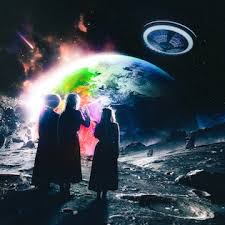
Review: Eternal Atake by Lil Uzi Vert

Eternal Atake is the second studio album from Philly rapper, singer, songwriter Symere Woods aka Lil Uzi Vert. It has been about three years since the last album, LUV is Rage 2, came out. This was an album that I enjoyed quite a bit, with songs like XO Tour Lif3, 444+222, and 20 min really standing out to me as catchy, infectious cuts with a lot of really enjoyable vocals. More than a songwriter or lyricist, Uzi’s main contribution to his songs come in the shape of his unique vocals and above average flows, which he displayed fairly well throughout mixtapes like Lil Uzi Vert vs. the World and The Perfect LUV Tape. Now, after years of hype, years of excruciating label drama, the wait is over. I went into this album with high expectations. After nearly three years in the lab, and more resources than ever before, I wanted an opus, and I’m sure many other fans of Uzi did as well. I wanted a Rodeo, or a Die Lit, or a Jeffrey. I enjoyed the singles leading up to the release, Futsal Shuffle and That Way. Long story short, this album was anticipated as a game changer, at least by me. And, after listening to it almost selectively for the last two weeks, I can’t help but be a little disappointed.

The Bad: The immense excitement that I had going in was nearly all gone by the halfway point of the project. Tracks in the first half are produced well, and Uzi does a good job switching flows and delivering some really sticky moments (Balenci Balenci Balenci Balenci) but they remain a little underwhelming. One of the main problems with the first half is how little sonic variety there is. The first six tracks are almost identical. None are bad by any means, but after a few listens, the 3:30 plus tracks can feel dragged out and underwritten, a little repetitive and sometimes, kinda boring. I’m Sorry is honestly kind of annoying, and so is Urgency (which has the only feature on the entire record for some indiscernible reason). The real problem is not what’s there, but rather, what isn’t: a historic moment for trap rap or pop hip-hop that has long been the anticipation for Atake.

The Good: When I first saw the 19 song track list and hour plus length, I balked a little. But Uzi does a great job of commanding attention throughout the entire record. Silly Watch, You Better Move, and Homecoming are pretty good, classic Uzi, and while they don’t have as much staying quality as some other songs from Eternal Atake, they are solid, if repetitive, bops. Chrome Heart Tags, Prices, and Venetia contain a bit of the personality from cuts like XO Tour Lif3 and Scott and Ramona. And P2, the concluding track (not counting the bonus tracks) is a sequel to Uzi’s biggest hit, Tour Lif3. TM88 does a great job of essentially remixing his own track, bringing in some new elements while still retaining the emotional grip of the original. There are some spectacular moments like the Travis Scott sample on Prices, the last verse of POP, the Chief Keef produced beat for Chrome Heart Tags, and the song outros that tell a short story of alien abduction and escape adding a level of mystery and intrigue to an otherwise pretty typical trap project.

Conclusion: Uzi’s personality and flamboyance lift Eternal Atake above other otherwise similar trap projects. He sticks to a theme of extraterrestrial adventure surprisingly well, and commands attention all through the long album. Unfortunately, EA still is just an Uzi project—and struggles to pull itself above trap clichés and occasionally boring songwriting. Perhaps this album was doomed to fail at least a little. After three years of radio silence from such a beloved figure, it was hard to not expect a groundbreaking, classic level album. Instead of a Rodeo, we got an Astroworld—not bad by any means, but heartbreakingly underwritten, unable to rise above the artist’s past music. The worst thing about this album is, despite how good it is, Atake is still unable to get over the bar it set for itself. I would not hesitate to recommend this album to a fan of Uzi’s past work or trap music in general, but Eternal Atake still plays it a bit too safe.

I give this album 7 close encounters out of 10. Thanks for reading.                       

Design a site like this with WordPress.com
Get started