Sigmund Freud, the father of psychoanalysis, often qualified humanity as evil– and in a sense, uncontrollable. All we are, according to Freud, is a bundled package of primal urges. Whether or not you agree with that (rather dismal) sentiment, no one can deny that humanity has quite a bit of evil within it. Thousands of years of blood and fire prove this. Underneath the facade of polite society is a terrifying amount of evolutionary instinct. Violence and sex, anger and lust are all unshakable facets of the human experience, as much as one may try to remove them. This is not to say we cannot overcome those once necessary tendencies, but our DNA is certainly working against us.
Art has always acknowledged this. In the ancient state of Athens, playwrights like Sophocles and Aeschylus wrote stories of fallen heroes. In Sophocles’ ‘Oedipus Rex’, a prince is abandoned by his father because of a prophecy saying the child would kill the king and marry his mother. The prince grows and, ignorant of his origin, kills the king and takes the queen (his own mother) as his bride. In Aeschylus’ ‘Oresteia’ a son attempts to avenge his father’s death, only continuing a chain of destruction dating back before he was born. Oedipus and Orestes are both doomed by gods and nature to follow paths of destruction. Fate and blood doom them and those around them, try as they might to reject it. It is that futility that can remind one of Freud’s bold and depressing declaration, and later, Kanye’s.
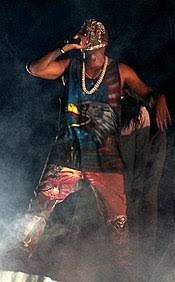
The instincts of violence, martial and carnal, that dwell within man can be terrifying. And terrifying is the best word to use for Yeezus. Infamous rapper, producer, designer, and renaissance man Kanye West released Yeezus in 2013. Three years after his grandiose opus, My Beautiful Dark Twisted Fantasy (a fairly buttoned up hip-hop record), West broke barriers and stunned the masses with an experimental, industrial album that seemed to borrow more from European electronic music than rap.
The album begins with a blaring, droning acid synth that jars the listener immediately. That track, ‘On Sight’, is a just a taste of what is to follow. As some other elements begin to materialize, there is West’s voice– almost drowned out by the wash of sawtooth synth, but yet, still stubbornly present. He snarls with hate: “A monster ’bout to come alive again”. Then suddenly, the abrasive tune stops and is replaced with a choir’s playful singing– and is quickly cut short. This will not be the last dramatic shift a song takes. In ‘Black Skinhead’, crunching drones and hums are combined with pounding drums to create a feeling of frantic racing. “I’m aware I’m a wolf, as soon as the moon hits” says West. The savagery just waiting beneath his skin is clawing to get out. He takes this idea even farther later in the track, claiming that “they say I’m possessed”. Track number three, ‘I Am A God’, starts with a thunderous bass coupled with an almost roots-like vocal performance. It quickly devolves into another synth heavy instrumental that allows West’s incredible voice to take center stage as he raps and screams with piercing ferocity. One could look at the bold declaration of “I am a god” as mere arrogance, but there is certainly more to it than that. His insistent tone almost sounds like one of pleading, of begging the listener to kneel before his visage.
In 2010, Kanye West released My Beautiful Dark Twisted Fantasy, a record some consider perfect- and was met with the worst sale numbers of his career. This left West spiteful of a corporate music industry that had failed him. These sentiments of disgust and indignation show up consistently in Yeezus, but most of all in track four, ‘New Slaves’. ‘New Slaves’ plays off a very catchy bass riff that switches between heavy distortion and orchestral thunder before the song transitions into a compressed ballad rock instrumental (with a little help from Frank Ocean). Kanye spits in the face of corporate sheep mentality, severing ties and proclaiming that he’d “rather be a d*** than a swallower”. Following that is ‘Hold My Liquor’, a spiteful sounding auto-tuned track that slurs rapper Chief Keef’s delivery. The slow beat drudges through while Kanye raps about losing control of himself. He can’t hold his liquor, control his temper, or handle his friends raucous attitudes. There are warped guitar solos and muffled drums throughout. Track six, ‘I’m In It’, blares acid bass and almost orgasmic background vocals in a twisted and lewd track. The stuttering and stilted percussion could remind one of modern glitch-hop like JPEGMAFIA or clipping. The dark and cold delivery portrays a loveless affair in some very explicit ways. It seems like Kanye rejects any good coming from his carnal escapades, but still cannot seem to free himself from it. “Got the kids-and-the-wife life, but can’t wake up from the nightlife, I’m so scared of my demons, I go to sleep with a nightlight”
‘Blood On The Leaves’ interposes piano and dubstep drums to a startling effect. Heavy auto -tune and soul sampling create a weary, sad sound, telling a story of betrayal and divorce. It certainly could be looked at as the “emotional summit of the album” as critic Ryan Dombal puts it.’Guilt Trip’ is probably the nicest song on the record, with more creatively used vocal splices and electronic chimes. Sparkling synths ring out as Kid Cudi desperately sings “If you love me so much why’d you let me go? Let me go…”. ‘Send It Up’ returns to the previous abrasive style, with a beat that sounds like a broken car alarm and more droning acid synthesizers. Kanye again raps about loveless sex with a woman who has a “heart colder than the souls of men”. His cycle of mindless addiction seems to be inescapable. The final song though, seems to be quite a bit more hopeful. The album concludes with a love song to West’s spouse, Kim Kardashian. The instrumental employs a repeating soul sample (“bound to fall in love”) with interposed singing from Charlie Wilson. Kanye’s dark desires are contrasted with his actual love for one woman, perhaps showing a properly ordered use of his tendencies. Lines like “I wanna f*** you hard on the sink” remind us that he is not, and perhaps never will be, free from his sexual instincts, but he now is “bound” to this woman through something more important. “But hey, ain’t nobody perfect” he admits. It does a brilliant job of tying the albums themes up in somewhat uncertain, but hopeful tones.
Many critics lauded “Yeezus” as a masterpiece on its release, while others found the departure from the “old Kanye” style to be obnoxious and pointless. West, usually a very diverse lyricist, spends nearly the whole album rapping about lust and anger. This focus on senseless violence and violent sex could certainly be viewed as distasteful, or just plain boring. But there is a lot more to this album than just that.
Throughout “Yeezus”, Kanye West raps “like a steamroller” (Dombal). His indulgent and twisted lyrics paint a picture of a sex-crazed lunatic. Many of his collaborators say this is not as true to life as it might seem though, and in reality West is very unlike the maniac “Yeezus” presents. These bars, like those in ‘I’m In It’ and ‘Hold My Liquor’, describe a hopeless cycle of pointless lust that ultimately leaves one purposeless. In ‘Blood On The Leaves’, West expands this idea of begrudged addiction that destroys a marriage. And in ‘Bound 2’, he realizes that “one good girl is worth a thousand b******” and he still wants to “make it to the church steps”. He acknowledges that the only thing that will actually make him happy is love, not meaningless and abundant intercourse.
Yeezus paints a picture of humanity– and it is a rather bleak one. There is something fallen about us, something in our blood, our DNA. It is impulsive, godless, angry, deceptive, selfish, and most of all, terrifying. West acknowledges that we can overcome this side of us, but never destroy it, as later on 2018’s ‘Ye’ he sings “Father forgive me, I’m scared of the karma, ‘Cause now I see women as somethin’ to nurture, Not somethin’ to conquer”. He knows he cannot just cure or remove these tendencies, only redirect them. Perhaps we all have something to learn from Kanye West’s raunchy and visceral masterpiece.
 art for cheap