Categories
Uncategorized

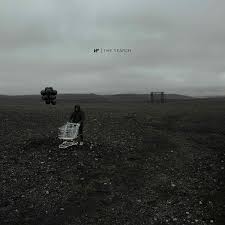
Review: The Search by NF

The Search is the fourth studio album from Michigan rapper and singer Nathan Feuerstein, aka NF. Feuerstein, now 29, has quite a bit under his belt with quite a few hit singles, as well as a platinum album (Perception). The technically skilled rapper’s early work was certainly interesting to me, and his 2017 single “Let You Down” was inescapable, but The Search was my first real critical look at Feuerstein’s work. Released last year, the album famously beat out Chance the Rapper’s disastrous The Big Day, much to the surprise of mainstream hip-hop fans. With no real foot in any camp, I feel comfortable to say The Search is retroactive in more than one way.

The Bad: Thematically, The Search is about Nathan’s past, present, and future. The first four tracks dwell on NF’s mental state—his OCD, his paranoia, his inabilities, and his demons. This may sound well and good, but after the fifteenth minute of melodramatic fast-rapping set to overblown instrumentals, it gets redundant. Much of the lyrics read one of two ways: hollow, repetitive expressions of self-hate (“That’s when I start to get anxious, That’s when my thoughts can be dangerous, That’s when I put on my makeup and drown in self-hatred”) or purposeless rhyme fillers (“I can be critical, never typical, Intricate with every syllable, I’m a criminal, Intimate, but never political, pretty visual”). This flip-flopping takes any bite out of good bars. It gives the idea that NF worries more about quantity rather than quality in wordplay. Songs like “Time” and “Hate Myself” try to emulate the pop rap success of “Let You Down” and “Lie”, but sound painfully underwritten. For some reason, Nathan seems to dislike featuring other artists on his tracks, and the hooks, sung by NF almost every time, suffer for it. As far as I can tell, there is one feature on the whole album (Sasha Sloan on “Only”). One of my biggest gripes with this album is the quality of the instrumentals. There is absolutely no variety or flavor in The Search’s beats—a death sentence for the bloated, 20 song track list. The runtime is around an hour and fifteen minutes, and the slow piano mixed with echoing drums tired me out within the first half hour. There’s only so much a man can take.

The Good: Nathan Feuerstein’s biggest strength is his fantastic (if ill-employed) flow. He does well on songs like “No Excuses”, and I enjoy a few bits of “When I Grow Up”. His voice stays crisp and smooth throughout most songs, and his raw talent is undeniable. There are moments on songs where Nathan’s honesty pushes through, and genuinely emotionally moving lines happen. One example of this is the dismal “Nate”. In this song, NF reflects on his past and his come-up. Though this is a concept not unheard of in rap, I found the dialogue between a young Nathan and his successful, future self to be rather good. Not as many lines fall flat, and the storytelling element that moves the track along is really good.

Conclusion: Though technically impressive, The Search is mired with inconsistency and uninspired melodrama. NF comes off sounding like a young Tyler Joseph, or a more innocent, straight-edge emo rapper on many songs. The hour-plus length coupled with a void of compelling backing beats stretched my patience. And, as much as I was impressed by his talented flow, NF is a bit behind the game. He has gone on the record claiming 2000’s Marshall Mathers as a big influence, and it shows a bit too much (and I can genuinely say that me calling Nathan’s work derivative of Eminem’s early career has nothing to do with anything but his sound). All in all, I did not find this album to be anything other than a blip on hip-hop’s radar, especially when you consider all the great rap albums that came out last year (All My Heroes Are Cornballs, Feet of Clay, Ginger, Bandana, and countless others.) I just hope that next time, NF summons a bit more artistic courage.

I give this album 3 balloons out of 10. Thanks for reading.
Categories
Uncategorized

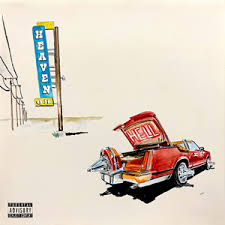
Review: Heaven or Hell by Don Toliver

‘Heaven or Hell’ is the debut studio album from Cactus Jack affiliate Don Toliver, an artist who first came onto my radar after a great feature in 2018, on Travis Scott’s ‘Astroworld’. After a pretty underwhelming performance on 2019’s Jackboys project and a lifeless Tik-Tok hit that seemed robotically engineered for the site, my interest was admittedly dialed back a bit. I hoped the lack of energy Toliver brought to ‘Jackboys’ was a fluke, not really indicative of his future as an artist, but sadly, I was let down dramatically by ‘Heaven or Hell’.

The Bad: Don Toliver struggles to do anything on his debut that does not resemble a far better artist. He often sounds like a bad version of his label head, Travis Scott. Other times, he seems to not just emulate, but plagiarize Young Thug’s sing-song style flows, just with less personality and flair than Thugger. Furthermore, throughout the 12 song track list, there are nearly no songs that actively jump out to me. Toliver’s dreary style is the epitome of boring; he makes songs that are 2:30 feel like 5 minute treks. I couldn’t count how many times I had to rip my finger away from the skip button, as Don Toliver stumbles his way through a lifeless instrumental with lifeless autotune and lifeless melodies. The title track, Heaven or Hell, and Company are both prime examples of this. The lyrics are pretty typical trap rap: drugs, money, sex, and the occasional gang talk. Toliver doesn’t seem to realize how ridiculously clichéd his writing is, and without an interesting vocal presence or a well-executed beat, it is mind numbing. The few features on the album aren’t bad, but can sound painfully out of place, like the explosive Sheck Wes on the chilled beat of Spaceship. Wes creates such a dramatic contrast of energy to the utter lack of vigor that Toliver provides and it almost sounds forced.

The Good: There are moments on some songs where I found myself nodding my head. After Party, one of the shorter tracks, has some pretty sticky vocal moments and some good production. No Idea, while being oversaturated and overhyped, delivers some fun in its high pitched, playful chorus. Some features, while not incredible, deliver a kind of oasis from Toliver’s same-old-same-old.

Conclusion: The primary feelings I got from ‘Heaven or Hell’ were lifelessness and unoriginality. The record is solidly produced, yet still finds a way to sound toothless; it is tightly mixed and mastered, yet still finds a way to sound half-assed, unfinished, and underdone. Most of the blame is on Toliver’s uninspired performances. It’s ironic that Don Toliver, with all his melodic non-rapping, sounds so incredibly monotone. He always sounds like he exists under the instrumental, not standing out or commanding attention. Even in the brightest moments of this record, Toliver just sounds like somebody else. He shows potential for sure, but with a debut so shaky, it makes me wonder why I was excited in the first place.


I give this album 3 purgatories out of 10. Thanks for reading.

Categories
Uncategorized

Review: 1000gecs by 100gecs

Last year, LA based band 100gecs released their first full project. The duo, composed of Laura Les and Dylan Brady, make some rather interesting music, equally inspired by “Skrillex and Playboi Carti”. The album, 1000gecs, is a whirlwind of bright and peppy noise that refuses to let up throughout its (all too short) 23 minutes. Genres are not just combined, but rather bastardized in both a ridiculous and intriguing manner. Electronic, Pop, Dance, Rap, Rock, Ska, Metal, Noise—all worm their way in at some point. It is bizarre, enigmatic, and way too much fun.

When I went to a Brockhampton show in November of last year, I had never heard of the opener–100gecs. Funnily enough, I was too late to see the band play, but I remember seeing their record on sale. The cover art– a picture of the two artists standing, backs to the camera, against a tree– fascinated me. It was weird and eye-catching. “What kind of music could they make?” I thought naively. I made a mental note to check the band out at some point, and enjoyed the rest of the concert.

The next day, I put the album on and gave it my full attention. I nearly fell out of my chair laughing. 1000gecs almost plays like parody, bouncing from style to style but always presenting a clear vision. However funny I found it, I was nevertheless mesmerized by its commitment to the chaotic, the disordered, and the extreme.  It is quite a bit abrasive (parts of the community refer to 100gecs as “Charli XCX on Adderall” or “Death Grips for weaboos”) but it stays fairly grounded in modern musical norms. That’s what makes 1000gecs so entertaining. While most subversive artist try to defy cliché by outright rejecting it, Laura Les and Dylan Brady take many modern trends and push them to the extreme.

Throughout 1000gecs, there is heavy use of auto tune and pitch control—so much that the voices of Laura and Dylan are almost drowned out in the wash of sugary noise. Distorted 808s pound and lo-fi trap drums tap their way through the under-mixed songs. On occasion, samples ring out alone, like on the fever trip “I Need Help Immediately” which sounds as if a cat walked on a soundboard and accidently uploaded it to the album. Many songs begin in one style and steeply change into something else, like the single “Money Machine”. Beginning as a banging trap rap cut, it breaks down into a droning noise with overpowering bass booming. Another, “800db Cloud” is a sweet love song that ends with metal screaming.

Dylan and Laura’s humor and wit is present undeniable in their work. Songs like “Stupid Horse” and “xXXi_wud_nvrstøp_ÜXXx” demonstrate this well (as does their bio section on Spotify). But 1000gecs isn’t just a good joke. It is a well-crafted and extremely enjoyable meditation on the chaos of modern day. It probably will come as no big surprise that the entirety of the album was recorded separately. Dylan and Laura would send each other bits over time until they had a full song, much like The Postal Service did in the 2000’s. The internet played a major role not only in the spreading of the album, but also in the incubation of it. The drastic and eclectic nature of the internet molded the sound of the record continually. Its chaos is not a defect, but rather a reflection of an ever changing world were styles and trends boom and bust.

“Here today, gone tomorrow” has become the mantra of an-increasingly impatient society. Ideas become tropes, which become clichés, and, after oversaturation, disappear. 100gecs is a true product of that artistic lifespan. Its genre hopping mish-mash can sound haphazard, but it really is meticulously crafted. I have found a lot of entertainment in its thought provoking, bizarre hyperactivity, and perhaps you may as well.


I’d rate this album 9gecs out of 10. Thanks for reading.

Categories
Uncategorized

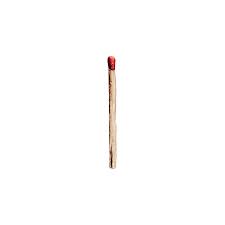
Review: Rammstein by Rammstein

RAMMSTEIN by Rammstein


RAMMSTEIN (or the untitled album) is the seventh studio album from German metal band Rammstein. It is composed of six members– Till Lindemann, Richard Z. Kruspe, Paul Landers, Oliver Riedel, Christoph Schneider, and Christian Lorenz. Needless to say, this is not the band’s first rodeo, as they have been making music for the last 25 plus years. Though they are famous for their controversial lyrics, themes, and performances, it would be a mistake to discount the German band as mere mindless shock metal. Combining elements of dancehall metal, gothic, and symphonic metal, Rammstein’s latest album is a testament to this.

The Bad: The most glaring error in RAMMSTEIN is the far weaker second leg of the album. Excluding the finale, “HALLOWMANN”, the last half is underwritten and rather boring compared to the dynamism displayed in the first half. The energy seems lost by “WAS ICH LIEBE”, and Rammstein never seems to fully regain their footing. The drumming on many songs is rather underwhelming, especially on the otherwise great “ZEIG DICH” and the less fun “TATTOO”. Many songs drag on for a bit too long (only two songs clock in shorter than four minutes), leaving a few good choruses and instrumentals feeling a bit dry by the third visit.

The Good: It is hard to not nod along to any of the infectiously aggressive songs of RAMMSTEIN. Lindemann’s vocals border on operatic at times, his deep-throated voice carrying many instrumentals to their landing point. I really enjoy his cocky, masculine inflections—the songs really wouldn’t feel the same without it. His emotionally charged performances on “DEUTSCHLAND” and “PUPPE” are high points on the album. The instrumentals, especially on the first leg, are majestic and surprisingly catchy. “DEUTSCHLAND”, “RADIO”, and “AUSLANDER” are immensely satisfying tracks that employ synths and keyboard well. The bass is clear but gritty, adding a sense of blunt sharpness. Guitars snarl and vibrate, taking their time to sink in. But the most surprising, and most commendable aspect of RAMMSTEIN was its lyrical and thematic depth. Far from the run of the mill shock rock lyricism, Lindemann paints vibrant and dark pictures of issues like nationality, abuse, religion, and hypocrisy. The band never shies away from their truth, a trait I find impressive. “DEUTSCHLAND” is a great example of this. The band looks at their country in shades of gray, presenting a conflicted feeling of pride, guilt, and anger toward their motherland. “ZEIG DICH” is another great cut that really displays the atypical poetry of Rammstein. “ZEIG DICH” displays a saddened disgust for the hypocrisy of modern day religion in an interesting way. Instead of condemning it as a whole, Lindemann seems to really attack the hypocrisy of much of the clergy. As a catholic, it is not hard to admit the failures of my church’s authority in recent years. An echoing choir accompanies the song throughout, creating not only an interesting statement lyrically, but also sonically.

Conclusion: Throughout RAMMSTEIN’s 46 minutes of vocal aggression and thundering instrumentals, there were many standout moments. I only wish they didn’t all appear in the first 25. I found myself returning to “AUSLANDER”, “SEX”, and “RADIO” more than the rest of the track list. It is disappointing that Rammstein’s combination of NDH, Gothic, and industrial could not keep pace throughout the album. I really did enjoy this album, and I hope that next time, Lindemann and company can summon the same bravado and masochistic magnetism through a whole project.


I give this album 7 UBERS out of 10. Thanks for reading.

Categories
Uncategorized

Essay: The Genius of Kanye West in “Yeezus”

Sigmund Freud, the father of psychoanalysis, often qualified humanity as evil– and in a sense, uncontrollable. All we are, according to Freud, is a bundled package of primal urges. Whether or not you agree with that (rather dismal) sentiment, no one can deny that humanity has quite a bit of evil within it. Thousands of years of blood and fire prove this. Underneath the facade of polite society is a terrifying amount of evolutionary instinct. Violence and sex, anger and lust are all unshakable facets of the human experience, as much as one may try to remove them. This is not to say we cannot overcome those once necessary tendencies, but our DNA is certainly working against us.

Art has always acknowledged this. In the ancient state of Athens, playwrights like Sophocles and Aeschylus wrote stories of fallen heroes. In Sophocles’ ‘Oedipus Rex’, a prince is abandoned by his father because of a prophecy saying the child would kill the king and marry his mother. The prince grows and, ignorant of his origin, kills the king and takes the queen (his own mother) as his bride. In Aeschylus’ ‘Oresteia’ a son attempts to avenge his father’s death, only continuing a chain of destruction dating back before he was born. Oedipus and Orestes are both doomed by gods and nature to follow paths of destruction. Fate and blood doom them and those around them, try as they might to reject it. It is that futility that can remind one of Freud’s bold and depressing declaration, and later, Kanye’s.

The instincts of violence, martial and carnal, that dwell within man can be terrifying. And terrifying is the best word to use for Yeezus. Infamous rapper, producer, designer, and renaissance man Kanye West released Yeezus in 2013. Three years after his grandiose opus, My Beautiful Dark Twisted Fantasy (a fairly buttoned up hip-hop record), West broke barriers and stunned the masses with an experimental, industrial album that seemed to borrow more from European electronic music than rap.

The album begins with a blaring, droning acid synth that jars the listener immediately. That track, ‘On Sight’, is a just a taste of what is to follow. As some other elements begin to materialize, there is West’s voice– almost drowned out by the wash of sawtooth synth, but yet, still stubbornly present. He snarls with hate: “A monster ’bout to come alive again”. Then suddenly, the abrasive tune stops and is replaced with a choir’s playful singing– and is quickly cut short. This will not be the last dramatic shift a song takes. In ‘Black Skinhead’, crunching drones and hums are combined with pounding drums to create a feeling of frantic racing. “I’m aware I’m a wolf, as soon as the moon hits” says West. The savagery just waiting beneath his skin is clawing to get out. He takes this idea even farther later in the track, claiming that “they say I’m possessed”. Track number three, ‘I Am A God’, starts with a thunderous bass coupled with an almost roots-like vocal performance. It quickly devolves into another synth heavy instrumental that allows West’s incredible voice to take center stage as he raps and screams with piercing ferocity. One could look at the bold declaration of “I am a god” as mere arrogance, but there is certainly more to it than that. His insistent tone almost sounds like one of pleading, of begging the listener to kneel before his visage.

In 2010, Kanye West released My Beautiful Dark Twisted Fantasy, a record some consider perfect- and was met with the worst sale numbers of his career. This left West spiteful of a corporate music industry that had failed him. These sentiments of disgust and indignation show up consistently in Yeezus, but most of all in track four, ‘New Slaves’. ‘New Slaves’ plays off a very catchy bass riff that switches between heavy distortion and orchestral thunder before the song transitions into a compressed ballad rock instrumental (with a little help from Frank Ocean). Kanye spits in the face of corporate sheep mentality, severing ties and proclaiming that he’d “rather be a d*** than a swallower”. Following that is ‘Hold My Liquor’, a spiteful sounding auto-tuned track that slurs rapper Chief Keef’s delivery. The slow beat drudges through while Kanye raps about losing control of himself. He can’t hold his liquor, control his temper, or handle his friends raucous attitudes. There are warped guitar solos and muffled drums throughout. Track six, ‘I’m In It’, blares acid bass and almost orgasmic background vocals in a twisted and lewd track. The stuttering and stilted percussion could remind one of modern glitch-hop like JPEGMAFIA or clipping. The dark and cold delivery portrays a loveless affair in some very explicit ways. It seems like Kanye rejects any good coming from his carnal escapades, but still cannot seem to free himself from it. “Got the kids-and-the-wife life, but can’t wake up from the nightlife, I’m so scared of my demons, I go to sleep with a nightlight”

‘Blood On The Leaves’ interposes piano and dubstep drums to a startling effect. Heavy auto -tune and soul sampling create a weary, sad sound, telling a story of betrayal and divorce. It certainly could be looked at as the “emotional summit of the album” as critic Ryan Dombal puts it.’Guilt Trip’ is probably the nicest song on the record, with more creatively used vocal splices and electronic chimes. Sparkling synths ring out as Kid Cudi desperately sings “If you love me so much why’d you let me go? Let me go…”. ‘Send It Up’ returns to the previous abrasive style, with a beat that sounds like a broken car alarm and more droning acid synthesizers. Kanye again raps about loveless sex with a woman who has a “heart colder than the souls of men”. His cycle of mindless addiction seems to be inescapable. The final song though, seems to be quite a bit more hopeful. The album concludes with a love song to West’s spouse, Kim Kardashian. The instrumental employs a repeating soul sample (“bound to fall in love”) with interposed singing from Charlie Wilson. Kanye’s dark desires are contrasted with his actual love for one woman, perhaps showing a properly ordered use of his tendencies. Lines like “I wanna f*** you hard on the sink” remind us that he is not, and perhaps never will be, free from his sexual instincts, but he now is “bound” to this woman through something more important. “But hey, ain’t nobody perfect” he admits. It does a brilliant job of tying the albums themes up in somewhat uncertain, but hopeful tones.

Many critics lauded “Yeezus” as a masterpiece on its release, while others found the departure from the “old Kanye” style to be obnoxious and pointless. West, usually a very diverse lyricist, spends nearly the whole album rapping about lust and anger. This focus on senseless violence and violent sex could certainly be viewed as distasteful, or just plain boring. But there is a lot more to this album than just that.

Throughout “Yeezus”, Kanye West raps “like a steamroller” (Dombal). His indulgent and twisted lyrics paint a picture of a sex-crazed lunatic. Many of his collaborators say this is not as true to life as it might seem though, and in reality West is very unlike the maniac “Yeezus” presents. These bars, like those in ‘I’m In It’ and ‘Hold My Liquor’, describe a hopeless cycle of pointless lust that ultimately leaves one purposeless. In ‘Blood On The Leaves’, West expands this idea of begrudged addiction that destroys a marriage. And in ‘Bound 2’, he realizes that “one good girl is worth a thousand b******” and he still wants to “make it to the church steps”. He acknowledges that the only thing that will actually make him happy is love, not meaningless and abundant intercourse.

Yeezus paints a picture of humanity– and it is a rather bleak one. There is something fallen about us, something in our blood, our DNA. It is impulsive, godless, angry, deceptive, selfish, and most of all, terrifying. West acknowledges that we can overcome this side of us, but never destroy it, as later on 2018’s ‘Ye’ he sings “Father forgive me, I’m scared of the karma, ‘Cause now I see women as somethin’ to nurture, Not somethin’ to conquer”. He knows he cannot just cure or remove these tendencies, only redirect them. Perhaps we all have something to learn from Kanye West’s raunchy and visceral masterpiece.


Categories
Uncategorized

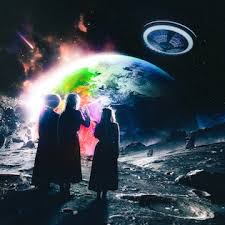
Review: Eternal Atake by Lil Uzi Vert

Eternal Atake is the second studio album from Philly rapper, singer, songwriter Symere Woods aka Lil Uzi Vert. It has been about three years since the last album, LUV is Rage 2, came out. This was an album that I enjoyed quite a bit, with songs like XO Tour Lif3, 444+222, and 20 min really standing out to me as catchy, infectious cuts with a lot of really enjoyable vocals. More than a songwriter or lyricist, Uzi’s main contribution to his songs come in the shape of his unique vocals and above average flows, which he displayed fairly well throughout mixtapes like Lil Uzi Vert vs. the World and The Perfect LUV Tape. Now, after years of hype, years of excruciating label drama, the wait is over. I went into this album with high expectations. After nearly three years in the lab, and more resources than ever before, I wanted an opus, and I’m sure many other fans of Uzi did as well. I wanted a Rodeo, or a Die Lit, or a Jeffrey. I enjoyed the singles leading up to the release, Futsal Shuffle and That Way. Long story short, this album was anticipated as a game changer, at least by me. And, after listening to it almost selectively for the last two weeks, I can’t help but be a little disappointed.

The Bad: The immense excitement that I had going in was nearly all gone by the halfway point of the project. Tracks in the first half are produced well, and Uzi does a good job switching flows and delivering some really sticky moments (Balenci Balenci Balenci Balenci) but they remain a little underwhelming. One of the main problems with the first half is how little sonic variety there is. The first six tracks are almost identical. None are bad by any means, but after a few listens, the 3:30 plus tracks can feel dragged out and underwritten, a little repetitive and sometimes, kinda boring. I’m Sorry is honestly kind of annoying, and so is Urgency (which has the only feature on the entire record for some indiscernible reason). The real problem is not what’s there, but rather, what isn’t: a historic moment for trap rap or pop hip-hop that has long been the anticipation for Atake.

The Good: When I first saw the 19 song track list and hour plus length, I balked a little. But Uzi does a great job of commanding attention throughout the entire record. Silly Watch, You Better Move, and Homecoming are pretty good, classic Uzi, and while they don’t have as much staying quality as some other songs from Eternal Atake, they are solid, if repetitive, bops. Chrome Heart Tags, Prices, and Venetia contain a bit of the personality from cuts like XO Tour Lif3 and Scott and Ramona. And P2, the concluding track (not counting the bonus tracks) is a sequel to Uzi’s biggest hit, Tour Lif3. TM88 does a great job of essentially remixing his own track, bringing in some new elements while still retaining the emotional grip of the original. There are some spectacular moments like the Travis Scott sample on Prices, the last verse of POP, the Chief Keef produced beat for Chrome Heart Tags, and the song outros that tell a short story of alien abduction and escape adding a level of mystery and intrigue to an otherwise pretty typical trap project.

Conclusion: Uzi’s personality and flamboyance lift Eternal Atake above other otherwise similar trap projects. He sticks to a theme of extraterrestrial adventure surprisingly well, and commands attention all through the long album. Unfortunately, EA still is just an Uzi project—and struggles to pull itself above trap clichés and occasionally boring songwriting. Perhaps this album was doomed to fail at least a little. After three years of radio silence from such a beloved figure, it was hard to not expect a groundbreaking, classic level album. Instead of a Rodeo, we got an Astroworld—not bad by any means, but heartbreakingly underwritten, unable to rise above the artist’s past music. The worst thing about this album is, despite how good it is, Atake is still unable to get over the bar it set for itself. I would not hesitate to recommend this album to a fan of Uzi’s past work or trap music in general, but Eternal Atake still plays it a bit too safe.

I give this album 7 close encounters out of 10. Thanks for reading.                       

Categories
Uncategorized

Review: 3.15.20 by Childish Gambino

One of my favorite quotes of the twentieth century is from author and essayist Edward Abbey. “Growth for the sake of growth” he once proclaimed, “is the mantra of the cancer cell”. It seems that in 3.15.20, singer, songwriter, rapper, artist, actor, comedian, and Renaissance man Donald Glover hits upon a similar sentiment.

            Donald Glover, also known as Childish Gambino, has been an artist in the public’s eye for about fifteen years now. He has also been an artist I’ve loved to hate. I have never found his comedy that funny, his writing that original, or his music enjoyable at all. But yesterday, I had the pleasure and privilege of hearing his fourth studio record—3.15.20. Everything from its album art (a plain white square and nothing else) to its oddly named track list (all but 2 songs are just time stamps for the song’s beginning) intrigued me. So, I gave it a listen. Then, I listened to it again. In the last two days, I have listened to its 57 minutes seven times. There are some things in art that are perhaps indescribable to an extent. But, I will try my best

            Throughout 3.15.20, a vision of the future is presented in bright, if wary, tones. The artistic leaps and bounds that Gambino takes are experimental, wondrous, and invigorating. But the most important quality about this album is not how new it sounds—it’s how old it sounds. Funk, soul, rap, R&B, disco, rock all make appearances. Many songs are best described as an old-fashioned funk song repackaged in a futuristic gloss. Glover relishes in his personal and cultural history, dancing through musical genres and styles, never stopping, but always seizing the moment. It’s incredibly beautiful to journey with Childish Gambino through these musical memories ranging from psychedelic, ambient, to pulsating. Rhythm drives most songs forward, pulling you in and out, back and forth on songs like ‘42.26’ and Algorhythm. It is hard to not sway in your seat to the groovy, mellow cuts, or bounce in place to the funky, punchy ones. There is so much effort in the production, with so many little things enveloping your sense of hearing at any given time, blanketing you in a comfy and warm set of vibrations.

            All these qualities add up to an overwhelming feeling of nostalgia. And it is in that nostalgic wonder that Gambino presents his message. Songs like the robotic ‘Algorhythm’ remind the listener of the coming future. It’s a future where “Everyone’s an addict” to the face paced fury moving about us. Singing from the perspective of someone who’s already given up on humanity and its flawed form, Gambino raps, “Humans don’t understand, humans gon’ sell a lie, Humans gotta survive, we know we gon’ die, Nothing can live forever, you know we gon’ try, Life, is it really worth it? The algorythm is perfect, mmh”. Is the perfection of a machine, the machines we’ve built, better than the imperfections of humanity?

            With humanity comes destruction, evil, and all manners of unspeakable things. It’s easy to give up on any kind of redemption for us. Animals kill, humanity murders. With the freedom God gave us, comes the “Freedom of being wrong, freedom of being lost”. We bit the apple, Glover reminds us in very biblical terms. On the next song, ‘Time’, he reminds us of our fragile existence, saying “Maybe the sky will fall down on tomorrow, But one thing’s for certain, baby, We’re running out of time”. How can we find meaning without permanence?

            Gambino wisely slows down the existential panic with the next track, ‘12.38’, a raunchy R&B song with some clever and funny lyrics (“Most these n***** wanna run around with these SZAs [scissors]” and “I be flexing like I’m eating Popeye’s spinach”). A great feature from rapper 21 Savage ties the first end of the song until the outro explodes with a futuristic chorus of distorted and manipulated vocals. This gorgeously transitions into ‘19.10’, the next song. ‘19.10’ has Glover recalling his youth, when his father told him to always remember his intrinsic beauty. Then, suddenly and sharply, the beat slows and the melody is stopped. Dark ambient sounds fill the track. ‘24.19’ starts. It’s a sad and introspective love song, reminiscing of a lover whom he never deserved. “You wanna be happy? Don’t look at my phone” asks a younger Gambino to his “sweet thing”. Suddenly, the beat switches yet again. A bass guitar echoes, chimes sound, and the vocals start fading away. Then, out of the silence comes pounding drums, and gasping vocals that pick up speed and then fall away again. Industrial noise drowns out Glover’s mumbled singing on the next track ’32.22’. The chorus’ chants and shouts with the distorted pounds of drums are not unlike traditional African music. But, as Gambino does time and time again on 3.15.20, it is not simply a revisiting of older musical ideas, but rather, a reflection and modern interpretation of them.

 Next, the funky, rock influenced ’35.31’ has Donald Glover remembering harder times, selling drugs and dodging cops in his youth. It almost sounds like an old slave tune, as Gambino draws a parallel between the slavery of yore and the modern slavery a young black male might feel, trapped in a system of drugs and violence he cannot escape. The juxtaposition between the rough ‘32.22’ and the smooth and subtle ’35.31’ reminds me of Kanye’s Yeezus, in its dramatic tension-and-release style. Then comes ’39.28’, an autotune laced, piano heavy track that has Gambino questioning life. “Why go to the party at all?” repeats through the track, again and again, until the plucky keyboard of ’42.26’ materialize. Upbeat drums and nostalgic vocals tell a story of a scared Donald Glover: scared of the path the Earth is taking, scared no one can ever change.

The next track shows Glover scared of humanity and the violence they are capable of. “Little girl, thirteen, broke down, The violence, Little boys playing ’round, shot down, The violence, the violence” he sings on ’47.48’. The song concludes with a conversation Donald Glover has with his daughter. “What do you love?” he asks her. The last song on the record, ’53.49’, is a peppy song that has Gambino finally rapping as per usual. He references his dead father and his faith in an intensely personal and experimental funk song that acts as a great conclusion to the record. The last note is a slightly muffled, light drone—the same drone that began the album on ‘0:00’. A fitting finale to an unfinished question.

In 3.15.20, Donald Glover shows us a vision of two futures. One is a future where we forget our past and the violence we create destroys us. Another is a future where we remember where we came from, and learn from our mistakes. It is this caveat of a message that reminds me of the quote I put at the beginning of this review. We cannot just push forward without purpose. We can’t keep growing without real reason. It is this hurried sense of progress that causes downfall and suffering.

Gambino pushes the boundaries time and time again on his new album, really demonstrating an intensely personal side that I had not expected from him. I was continually surprised and inspired by 3.15.20, and this, mind you, comes from a doubter of Childish Gambino. The last time I enjoyed an album this much was 2019’s Igor by Tyler, the Creator. Brilliantly pulling elements from his past, but never dwelling on old ideas, Glover triumphs spectacularly on his modern take on funk and soul. I cannot wait for what’s next from him.

I give this album 9 Big Feet out of 10. Thanks for reading

Categories
Uncategorized

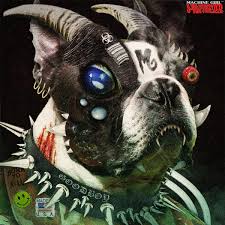
Review: U-Void Synthesizer by Machine Girl

U-Void Synthesizer is an album from Brooklyn native Matt Stephenson, aka Machine Girl. His sixth independent album, U-Void was released earlier this year on February 26th, 2020. Its experimental mix of digital, rave, industrial, and noise turned some heads, including mine. Though I had heard of the band before, I had never taken the time to listen to a full project from them, and when the record surfaced in late February, I gave it a look. Immediately after hearing it, I went and listened to the rest of Machine Girl’s catalog. Writer Paul Simpson aptly described the project as “equally apocalyptic and ecstatic”, influenced by punk, industrial, electronic, and dancehall. Even though I am not exactly new to the digital hardcore scene, being a big fan of Death Grips and dabbling in some other entry level electro-noise, Machine Girl was a revelation to me. Stephenson so elegantly takes the ferocity and vigor of artists like Zach Hill and Andy Morin, but also, an attention to detail that is almost mind-boggling.

The Bad: On occasion, U-Void can sound derivative. This is perhaps unavoidable in the oversaturated digital noisecore spring of Death Grips clones, but to call Machine Girl a copycat would still be unfair. Songs like ‘The Fortress (The Blood Inside)’ and ‘Scroll of Sorrow’ could have been lifted from 2016’s Bottomless Pit. The vocals are a little one dimensional, as Stephenson spends the entire 32 minutes of the album screaming his head off and not doing much else. Lyrically, there are a few moments that smack of melodrama rather than emotional honesty, like “My ugliness is not my fault, I know God just made me wrong” on ‘Scroll of Sorrow’. On a first listen, it is also too easy to get lost in the sea of sound that Machine Girl presents, cheapening the experience by clouding the real driving factors of a given song.

The Good: Machine Girl enjoys making you squirm. One example of this is ‘Splatter’, an aggressive and uncomfortable song that really takes a lot of attention to grasp.While this may be a turn off for many listeners, I actually enjoy it. The more maximalist approach to production is vivid, always throwing something new at you and relishing its bombastic violence. It doesn’t just hold your attention—it grabs it by the throat and doesn’t let go. Oppressive drums, melodies distorted to the point of nonsense, cryptic and visceral lyricism, waves of noise that devolve and evolve around themselves; everywhere, there is aggression, pure and unbridled. Stephenson captures the worst kind of emotions through blood and sweat. Songs like ‘Devil Speak’ and the closer, ‘Batsu Forever’ make my skin crawl and my head bang. There are political mumblings throughout, but they never sound preachy. Rather, they sound like genuine expressions of dissatisfaction and pain, in a fashion not unlike punk rock and its common messages. “Give me the womb, Give me the cure, Give me death” shouts Stephenson on ‘Blood Magic’. There are moments of great humor that contrast surprisingly well in the chaos around them, like the off-beat vocal snippets at the end of most songs (‘The Fortress’—“I don’t give a s***, send the f****** police!” and ‘Kill All Borders’—“I spy with my little eye”) or the random barks and woofs of dogs interspersed at points.

Conclusion: U-void Synthesizer consistently terrified and energized me. It’s this kind of aura that more music should try to find. This album didn’t just hold my attention—it grabbed me by the throat and didn’t let me breathe throughout its 11 tracks. But at the end, all I want is more. Stephenson’s creativity and brutal honesty are on full display, and it is wonderful. Every bit of the complicated and gritty instrumentals sounds poignant and purposeful. The onslaught almost seems to reflect the negative aspects of life itself, always trying to push and shove the listener with a washy of noises that are rough, and never seem to get better. Stephenson’s nihilistic view of existence is presented with courage and artistry, and that is commendable. The maximalism is like a reflection of the only way such a project could exist—the insanity and opportunity of the internet. Stephenson admits, his success is nearly all due to the chaotic nature of the internet, as sites like 4chan and Rate Your Music really forwarded his career by providing a platform and spreading his creations. Ordered in its chaos, beautiful in all its repulsive glory, Machine Girl triumphs with its newest work. While not a perfect project, U-Void Synthesizer fights tooth and claw for every note and beat, and is one of my favorite albums of the year so far.

I give this album 8 friendly dogs out of 10. Thanks for reading.

Categories
Uncategorized

Review: Ok I’m Sick by Badflower

OK I’M SICK by Badflower

Ok I’m Sick or OK I’M SICK is the first full length album from Los Angeles alternative rock quartet Badflower. The group is composed of singer Josh Katz, guitarist Joey Morrow, bass guitarist Alex Espiritu, and drummer Anthony Sonetti. Back in 2018, their single ‘Ghost’ popped onto my radar, a punchy alt rock cut with a lot of dramatic vocals and a tight instrumental. I didn’t think much of it then, but I went into Ok I’m Sick without many expectations. Their debut is a healthy 13 song, 55 minute long endeavor that employs elements of alt-rock, pop-punk, and emo with confidence—a misplaced confidence unfortunately.

The Bad: Josh Katz’s vocal and lyrical performances range from a tad overdone to insufferable. His overdramatic crooning on tracks like ‘x ANA x’ and ‘We’re In Love’ gets old fast. Then, songs like ‘Promise Me’ and ‘24’ dial it back considerably for a more melodic pop-punk take that is similarly fence-hugging and uninspired. The vocals on ‘Murder Games’ were so similar to the small amount of Evanescence I’ve heard, I had to do a double take. Getting into the lyrical elements of the record, Badflower cannot be called unambitious. The song topics range from drug abuse on songs like ‘x ANA x’ and ‘Heroin’ to severe depression and self-harm like on ‘Ghost’. However, the way these topics are treated, I get about as much emotional depth from them as I do from reading the angst-ridden slam poetry of a middle schooler. This is not to say none; it is, however, a little difficult to take them seriously at some points. Katz slams you over the head with his unsubtle songwriting and that is, to me, very off-putting. Compared to the intricate, intriguing approach other emo pop-rock bands like Arrested Youth and Twenty One Pilots take approaching the same topics, Badflower might as well spoon feed their opinions to you. Additionally, some songs just sound preachy—there is a song about how we should kill Donald Trump (‘Die’) and another about veganism (‘Murder Games’). Politics and opinions aside, Badflower’s writing is juvenile on these tracks.

The Good: Now, not every song’s lyrics elicit a cringe. Some sound genuinely painful, in a very good way for emo rock. There are moments on ‘Ghost’ that shocked me pretty well, and ‘Girlfriend’ is depressing and hilarious at the same time. Both are overall pretty enjoyable songs. ‘Daddy’ is a story about abuse and violence that manages to not sound entirely tasteless. It honestly is one of the best points of the album, making me uncomfortable in a brutally honest and up-front way. The vocals are considerably better as well, with Katz’s little falsettos toward the end of the track really popping out to me. In terms of the instrumentals, there is not much room for improvement. It is common for alt rock or emo-pop bands to fall into a trap of overproduced and over mixed blandness. Shinedown’s and Fall Out Boy’s last few records are abysmal for those exact reasons. Badflower manages to avoid this pitfall though. While I don’t exactly love the style in general, Badflower legitimately commands attention through their instruments, with songs like ‘24’ and ‘Heroin’ sounding majestic.

Conclusion: OK I’M SICK is instrumentally tolerable, but Katz’s songwriting really distracts from an otherwise punchy album. The vocals are overblown, and when the topics darken the lyrics can come close to childish. It’s not terrible, buts it’s not great. And it is most certainly not something I’d recommend to anyone not already knee deep in the genre.

I give this album 4 plastic murder bags out of 10. Thanks for reading.

Design a site like this with WordPress.com
Get started